


1863
Ibrahim Tannous Sader Establishes Lebanon’s First Bookstore: “Al-Maktaba al-Umumiya” or “The Public Bookstore”
Beginnings
The Sader story begins during the Ottoman period with Ibrahim Sader, the founding grandfather of the dynasty, who migrated from the village of Darb al-Sim to Beirut after the events of 1860. An illiterate peasant, he started working as an umbrella repairman and would sometimes exchange his labor for knowledge. Accordingly, some customers taught him to read and write, while others paid him with books. Over time, the volumes accumulated in his workshop. One day, a passerby asked to buy one of the books, and the first sale was made. From that moment, Ibrahim began arranging the titles in a scientific and alphabetical order and gradually advanced in this pursuit. In 1863, he established Lebanon’s first commercial bookstore, which became renowned as The Public Library.
1886
The First Publications of the Public Library (or Bookstore)
Ibrahim Sader’s work expanded from selling books to publishing them as Beirut transformed into a leading city in commerce, science, publishing, and culture in the Ottoman Empire. He published several books at his own expense under the name of the Public Library, including the book “Principles of Ottoman Criminal Proceedings.” (one of the earliest commercial legal publications)
1890
Ibrahim Sader Establishes the Scientific Press
Ibrahim expanded the scope of work to include publishing in the fields of law, culture, and literature at the “Scientific Press,” under the supervision of his son Yusuf Sader.
1893
Transferring the Trust from Ibrahim to His Sons
The father and his two sons, Yusuf and Salim, agreed to transfer the trust as follows: the press and everything related to it would go to Yusuf, and the bookstore to Salim. Thus, the “Public Library” continued on one hand through the “Scientific Press,” to become “Legal Publications House,” and under the name Sader Library with his son Salim, changing its name to become Sader Press, which soon gained wide fame.
1908
Sader Diary: Modernizing Professional Timekeeping
To meet the needs of a new era and a changing Beirut society, Yusuf Sader broadened the press’s offerings with the publication of the SADER Calendar, followed soon after by the renowned SADER Agenda. At the time, the Agenda stood out for the precision of its dates and the wealth of practical information it contained, making it an essential tool in a Beirut energized by commerce, exchange, and transport. More than a century later, the Sader Agenda continues to be published to this day.
1921
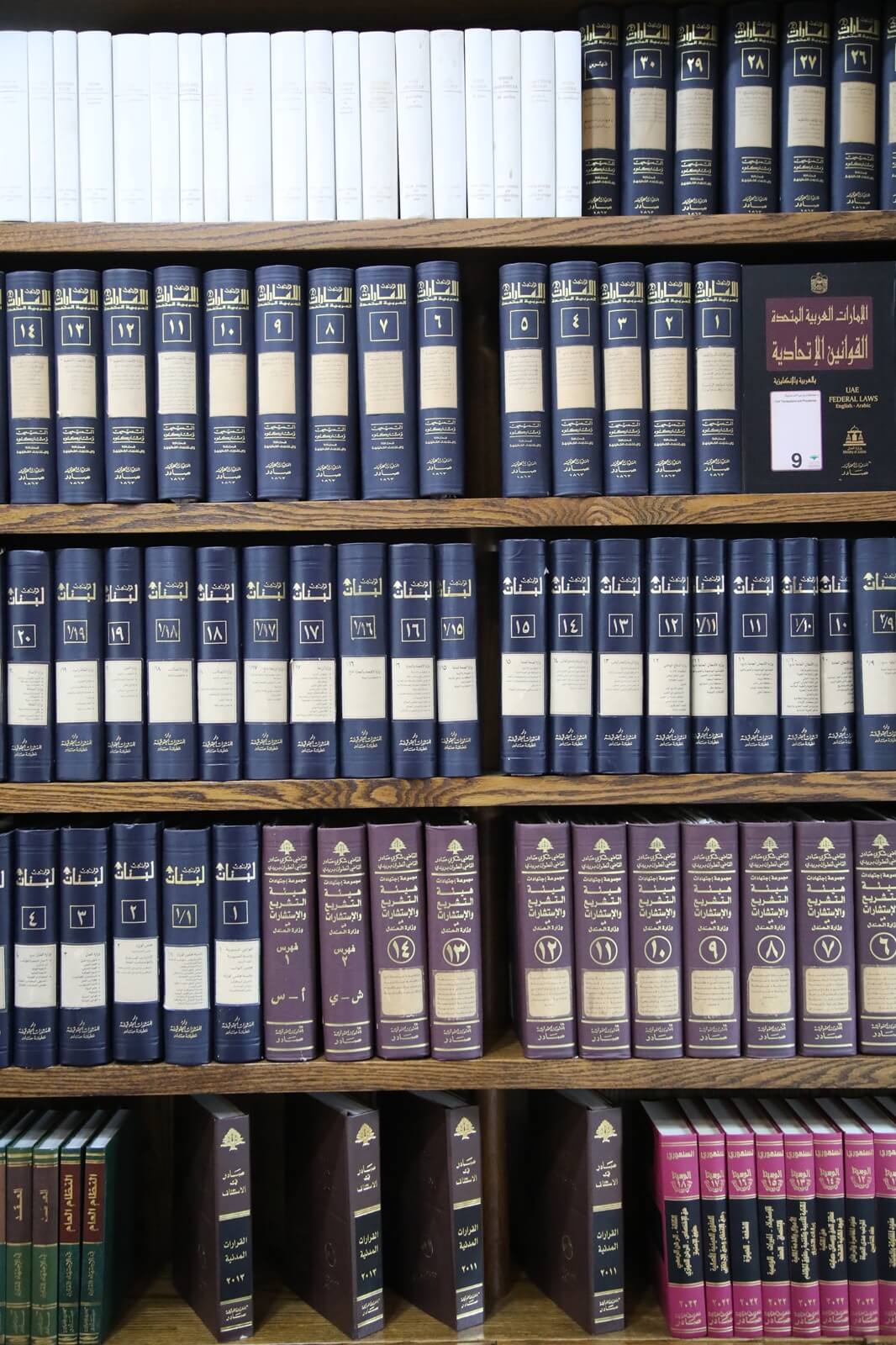
The First Compilation of Lebanese Laws
Yusuf Sader published the first legal compilation of its kind in Lebanon and the Arab world: “The Collection of Laws in Lebanon”. Issued in nine volumes totaling 3,800 pages, it was accompanied by alphabetical indexes to enhance its utility. Through this pioneering work, Sader played an active role in Lebanon’s state-building process. Its reputation spread widely, with the United Nations Library in New York acquiring a complete set, and several American universities soon following suit. Building on this success, he later published the ‘Collection of Syrian Government Decrees’, issued in eight volumes totaling 2,600 pages..
1921
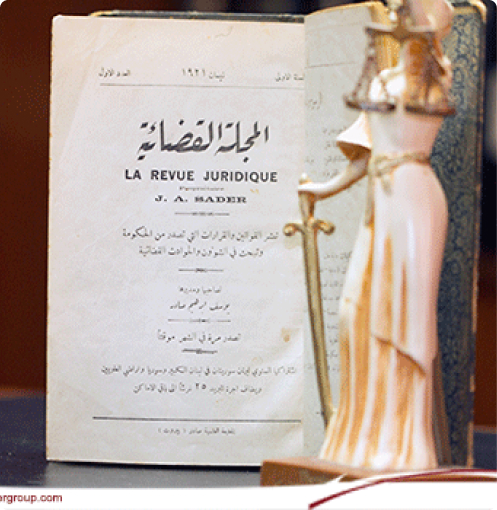
The Judicial Magazine: The First Judicial Magazine in the Arab World
In a pioneering step, Yusuf Sader, the legal expert, launched the first magazine concerned with law in the Arab world: “The Judicial Magazine” in 1921. Through it, he established the concept of general legal culture, publishing official decisions, decrees, and communiqués issued by governments under the Mandate, as well as rulings of the Courts of Cassation in Greater Lebanon and the Syrian Government, decisions reviewing legal questions, and significant legal articles. He enriched the Journal with detailed indexes arranged alphabetically.
Among the most important texts published in the Journal during this formative stage of modern Lebanese history were the Lebanese Constitution, the Lebanese Nationality Law, the Intellectual Property Protection Law and the Cedar Protection Law.
1924
Yusuf Sader published the “Collection of Laws”, the first comparative legal compendium of its kind in the Mashreq, encompassing all the laws in force across the Arab countries that had separated from the Ottoman administration. Its aim was to present modern legal opinions and theories so that law students would not miss any developments in the field. The collection comprised seven volumes, published between 1924 and 1932.
1926
Publishing the Lebanese Constitution for the General Public in the Judicial Magazine
The Lebanese Constitution was issued in 1926, marking a turning point in the nation’s modern history. With its adoption, the Lebanese Republic emerged as the first republic in the Middle East. In record time, Yusuf Sader published the text of the Constitution in the July 1926 edition of The Judicial Magazine, only two months after its approval in May of that year.
1930
Launching the “Modern Delights” Women’s Magazine
“Modern Delights” was a renowned weekly women’s literary magazine in Lebanon and the Arab world, founded and published by Adeeb Yusuf Sader in 1930. It featured short novels as well as advertisements for the latest technological innovations.
1935
Partnership with the Rihani Family
Yusuf Sader established “Sader–Rihani Presses” with his brother-in-law Albert Rihani, brother of the intellectual Amin Rihani, whose works Yusuf had been publishing since 1910. Yusuf’s wife, Adel Rihani, was Amin Rihani’s sister.
1946
Transferring Legal Knowledge from Turkish to French and Arabic
After Lebanese independence in 1943, Yusuf Sader translated a collection of modern laws from Turkish into French, at the request of French judicial advisor Mr. Declan, for use by French judges in the mixed courts. He also rendered them into Arabic to broaden their accessibility. Between 1941 and 1946, he published major legal texts in French, including the Penal Code, the Commercial Code, and the jurisprudence of the Mixed Court of Appeal.
1953
Adeeb Sader in the “Big League”
Bearing a great legacy and heavy burden, Adeeb Sader carried forward his father Yusuf’s mission — publishing numerous legal works and continuing The Judicial Magazine, which had become dedicated to laws and their amendments. Through the press, soon known as the Official Press, and the publishing house that issued works for leading figures in law and politics, Adeeb Sader entered the “big league” among rulers and statesmen and secured his place in their circles.
1960
Advancing Education and Culture
Adeeb Sader turned his attention to education, founding the widely acclaimed “Culture Magazine”, which became known for its sound educational ideas aimed at shaping responsible citizens. He also introduced summer holiday homework to Lebanon. In addition, he chaired the board of the Lebanese Publishers Company, which specialized in publishing national school textbooks issued by the Educational Center for Research and Development.
1970
Modernizing Printing and Introducing Automated Typesetting
Sader Press accompanied every stage of the evolution of the art of printing and, ever innovative, played a key role in advancing this sector in Lebanon by modernizing the typesetting process, moving from manual typesetting to computer-based methods.
1970
Publishing “Al-Adl Magazine” and Cooperation with the Beirut Bar Association
Adeeb Sader began printing “Al-Adl Magazine”, the official journal of the Beirut Bar Association, which continues to be printed at Sader Press to this day.
1972
Establishing the Lebanese Publishers Union
In 1972, Adeeb Sader participated in establishing the Lebanese Publishers Union, an important initiative to support and organize the publishing industry in Lebanon.
1982
Joseph Sader Continues the Journey
Amid the painful years of civil war that ravaged Lebanon and made his task arduous, Joseph Adeeb Sader did not relent. He continued along the path set by his forefathers, expanding the legal catalogue and publishing numerous works for leading Lebanese and Arab judges, lawyers, and professors.
1984
Press Bombing: SADER Pays the Price of War
The fires of the Lebanese war did not spare SADER, whose headquarters on Damascus Road in central Beirut stood on the frontline. The press, responsible for printing the Official Gazette, was shelled more than once. In 1984, it was destroyed in a bombing, and much of Sader’s archive was consumed by flames.
1985
Moving the Headquarters to Dekwaneh | Publishing the award-winning edition of “The Prophet” by Khalil Gibran
In 1985, following the bombing and ongoing conflict, Joseph Sader relocated the headquarters to Dekwaneh, a safer location. During this period, Sader published a landmark luxury edition of Khalil Gibran’s The Prophet, which became a symbol of Lebanese literary and cultural heritage. This edition was later adopted as an official gift from Lebanese heads of state and government to distinguished guests during their international visits. In 1997, it received the London Advertising Award.
1992
Launching the “Laws of Lebanon” Series
With the end of the Lebanese Civil War in 1991, Joseph Sader recognized the urgent need for a comprehensive compilation of Lebanese legislation. He created the Laws of Lebanon, an ambitious 33-volume work that quickly became one of the country’s most important legal references. The collection played a pivotal role in re-establishing Lebanon’s legal order in the post-war period and soon became indispensable to state administrations, institutions, universities, judges, and lawyers alike. In a distinctive innovation, the laws were organized according to the structure of the Lebanese state, with every piece of legislation placed under its corresponding ministry — for example, intellectual property law under the Ministry of Economy and Trade.
1996
Launch of the Legal Research and Studies Center: Sader’s Transformation from Publisher to Author
To address a gap in legal and juridical publishing, Sader undertook its first strategic transformation, moving from publisher to author and source of legal knowledge. This shift led to the creation of the Sader Legal Research and Studies Center, composed of an elite group of judges, lawyers, and legal experts under the leadership of lawyer Rani Joseph Sader. The Center produced numerous landmark collections, including the renowned Sader Annotated Codes (Sader Between Legislation and Jurisprudence), Sader in Civil and Criminal Cassation, Sader in Comparative Jurisprudence, Sader in International Agreements, Jurisprudence of the Legislation and Consultation Authority, Jurisprudence of the Court of Accounts, Jurisprudence of the Council of State, and Sader in Legal Dictionaries (Les Juridicts), among others. These works quickly became indispensable references for lawyers and jurists across the region.
2002
Launch of the Electronic “Laws of Lebanon” Collection and the Transition to Modern Publishing
Sader, which had continually kept pace with the evolution of the art of printing, was quick to embrace the technological revolution. The company undertook its second major transformation, moving from traditional paper publishing to modern electronic publishing. This shift gave rise to the Sader Legal Informatics Collection in 2002, which gathered Lebanese legislation, leading jurisprudence from Lebanese courts, and international agreements on continuously updated CDs. The material was carefully organized, indexed, categorized, and cross-referenced with related legal texts and judicial decisions, setting a new benchmark for legal research in Lebanon.
2003
SADER in the Emirates and the Transformation into a Regional Publisher
Sader’s third transformation was from a local publisher into a regional one. After several attempts in different Arab countries, from Morocco to the Levant, the first success came in the United Arab Emirates. Over four years, Sader collaborated with Al Tamimi & Partners to launch the print edition of the “Laws of the Emirates” Collection, modeled on the spirit of the Laws of Lebanon Collection. This was later followed by the release of the “Laws of the Emirates” on CDs. Both editions achieved wide success within the Emirati legal and judicial community.
2004
Launching Partnership Between Lebanon’s Council of State and SADER
SADER Legal Publications launched the official website of the Lebanese Council of State (www.statecouncil.gov.lb) along with its special guide. The initiative was inaugurated at the Lawyer’s House under the patronage of Justice Minister Charles Rizk, represented by Council of State President Judge Ghalib Ghanem The project was funded by the US Agency for International Development through the Transparency and Accountability Program managed by AMIDEAST Lebanon.
2005
Launching the First Lebanese Laws Website in English
SADER launched lebaneselaws.com, the first online portal for Lebanese laws in English, in cooperation with the Ministry of Economy, USAID, and AMIDEAST. The website received several awards in recognition of its contribution to legal accessibility.
2006
July 2006 Launching Partnership Between Lebanese Ministry of Justice and SADER
Sader enters into partnership with the Lebanese Ministry of Justice and launches the Ministry’s electronic portal.
2006
SADER in Kuwait
SADER took its first steps in Kuwait in cooperation with the Kuwaiti company AIMS, working on the documentation of legal information for the state’s official legal website. A memorandum of understanding was signed between SADER and AIMS, through which SADER provided support in research, consultations, legal translation, legal informatics, project management for the proper application of law, as well as printing and publishing.
2007
Sader becomes a Strategic Partner for Government Bodies in the Emirates
Sader’s experience and reputation had extended beyond Lebanon to the wider Middle East, making it a trusted partner in providing legal solutions for several government bodies in the United Arab Emirates. In 2007, Sader developed the national legal portal for the UAE Ministry of Justice. It also modernized the legal department of the Ministry of Foreign Affairs and documented the UAE’s bilateral and multilateral international agreements. In addition, Sader established the legal portal for the Abu Dhabi Government General Secretariat, automated the Official Gazette, and linked it directly to legislation.
2010
2010 (July) Sader Strategic Partner for Global ‘LexisNexis’
Through successive strategic transformations, Sader moved closer to its goal of becoming the leading source of Arabic legal information worldwide. This vision led to a partnership with LexisNexis, a global expert in legal publishing, to launch the Lexis Middle East Legislation portal. The online search and browsing platform provide access to amended legislation, court decision summaries, and commentary on the laws of the United Arab Emirates, Saudi Arabia, Qatar, Oman, Kuwait, and other Middle Eastern countries.
2010
2010 (April) SADER in Jordan
After opening its office in the Hashemite Kingdom of Jordan, Sader began working in cooperation with Al Jazi & Partners (lawyers and legal consultants) to provide jurists with access to Jordanian legislation, decisions, judicial rulings, and other legal materials. Sader also signed a memorandum of understanding with the Jordanian Judicial Council to establish an electronic portal for publishing and categorizing Jordanian court decisions, modeled on the legal databases it had previously developed in other Arab countries.
2010
Sader Enters the Digital Printing Era
Sader was the first to introduce digital printing in Lebanon, marking a new chapter in its evolution in the art of printing.
2011
July 2011
SADER Provides Legal Solutions for the Beirut Bar Association
Sader, in cooperation with the ‘Beirut Bar Association,’ launches the Electronic Legal Portal for the Bar Association, the first syndicate legal portal of its kind in the Arab world.
2011
Sader Provides Legal Solutions for the Beirut Engineers Syndicate
Sader, in cooperation with the Beirut Engineers Syndicate, launched the Engineering Laws Collection in Lebanon, the most comprehensive legal encyclopedia of its kind in Lebanon and the Middle East.
2012
Relaunching ‘The Judicial Magazine’
Sader relaunches The Judicial Magazine with a new look, expanding its scope to cover legal topics, judicial news and insights, in-depth legal research, and interviews with leading figures in law and state.
2013
2013 (April) Making SADER Lex Available to Judges for Free
Guided by its belief in the rule of law and its commitment to corporate social responsibility, Sader, in cooperation with the Ministry of Justice, made the SADER Lex portal available free of charge to civil, administrative, and trainee judges across Lebanon. This electronic database enabled them to access legal information quickly and from anywhere.
2013
January–July 2013 — Launch of the SADER Lex UAE Portal
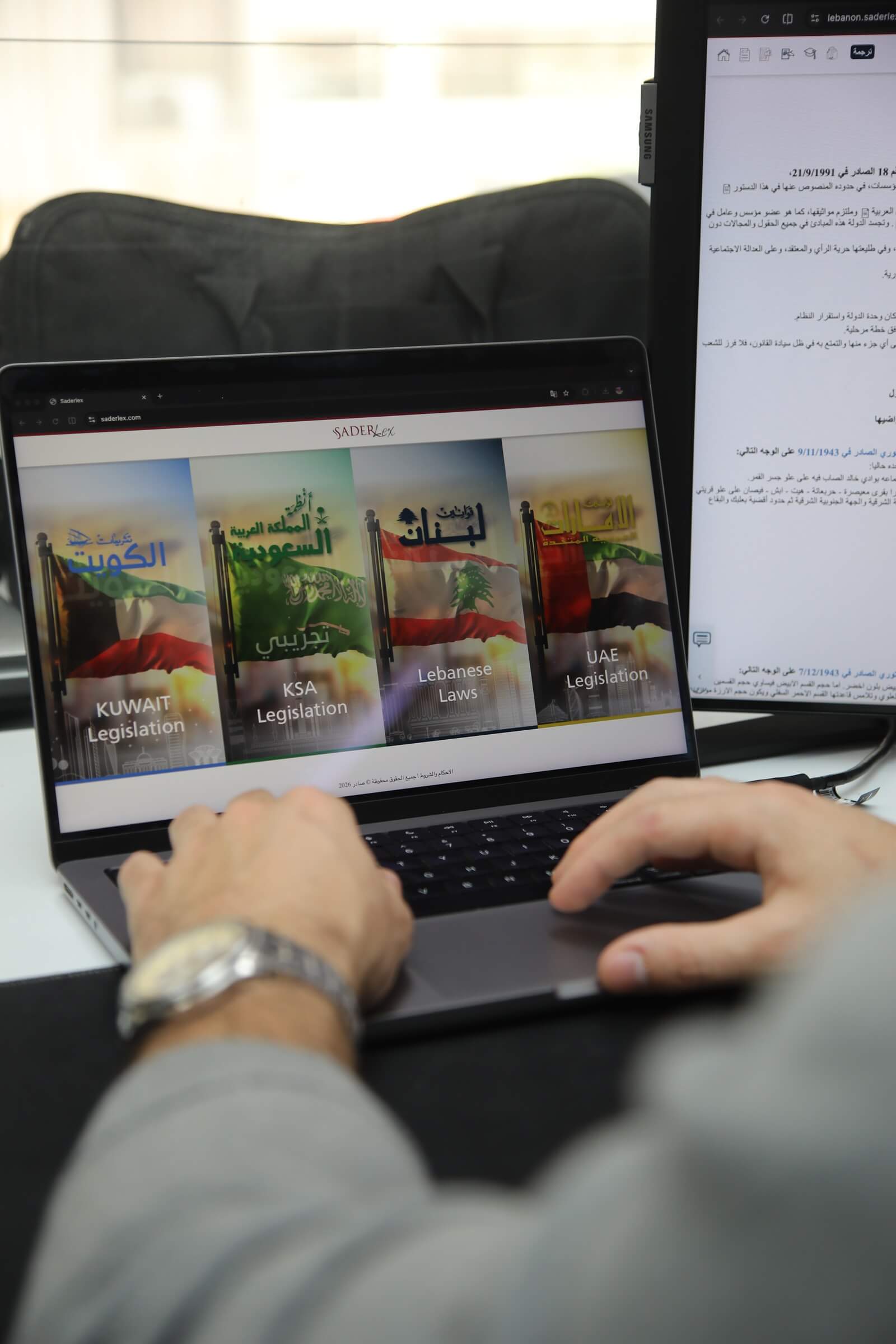
Sader launched the SADER Lex UAE portal, which includes the federal legislation of the United Arab Emirates alongside the local legislation of Dubai, Abu Dhabi, Sharjah, Umm Al Quwain, Ras Al Khaimah, and Ajman. It also incorporates both ratified and non-ratified international agreements. The portal links legal texts with interpretations, notes, jurisprudence, explanatory memoranda, and selected scholarly opinions, creating a comprehensive and connected legal resource.
2013
2013 Launch of the SADER Lex Portal
Sader launched the SADER Lex portal, the first of its kind in Lebanon, bringing the Laws of Lebanon collection online and integrating it with Sader’s annotated codes and interpretations, with cross-references linking related documents. Equipped with advanced search engines to broaden and facilitate research, the portal also includes collections such as Sader in Cassation, Legislation and Consultation Authority, Court of Accounts, Council of State, Sader in Jurisprudence, International Agreements, and the Official Gazette.
2013
Launch of SADER Lex Online Legal Portal
SADER launched the Laws of Lebanon Portal, one of the first web-based legal portals in Lebanon and among the earliest in the Arab region. The platform brought together legislation from Lebanon and the UAE in a fully interconnected format, linking laws to judicial decisions, scholarly commentary, and official interpretations, making legal research faster, more reliable, and more accessible. It is known today as SADER Lex.
2013
SADER Celebrates 150 Years
In 2013, SADER marked one hundred and fifty years of service to Arab legal culture with a ceremony held at the Beirut Bar Association. The occasion brought together ministers, members of parliament, judges, and leading figures of the legal community, who reflected on SADER’s contribution to legal knowledge and the rule of law across the region. The SADER family reaffirmed its commitment to preserving and advancing Lebanese legal culture for the generations to come.
2014
ADER Expands to Cyprus
SADER established a presence in Cyprus, extending its reach beyond the Arab region and opening new ground for international partnerships and collaboration.
2018
Joseph Adib Sader Honored
Joseph Adib Sader was awarded the Order of the Cedar at the rank of Knight by the President of the Republic, in recognition of his contribution to publishing and culture in Lebanon. That same year, he was re-elected President of the Lebanese Publishers’ Syndicate for a second term.
2018
The Youssef Sader Foundation for Legal Culture
Rany Sader established the Youssef Sader Foundation for Legal Culture, the philanthropic arm of SADER Legal, dedicated to preserving Arab legal heritage and advancing the rule of law. The Foundation safeguards rare legal archives dating from the late nineteenth century and pursues initiatives in access, education, and legal innovation across the region.
2019
Launch of SADER Unipro
SADER launched SADER Unipro, the first legal education mobile application in the Arab world, designed by law students for law students. The app gave users access to Lebanese and Arab legislation, case decisions, doctrine, and exam resources, while connecting them to career opportunities and a community of future legal professionals. SADER Unipro brought the depth of SADER’s legal knowledge directly into the hands of the next generation.
2019
SADER Expands to Saudi Arabia
SADER established a presence in Saudi Arabia, extending its reach into the Gulf and strengthening its commitment to serving the region’s growing legal community.
2021
Launch of Middle East Sports Law
SADER launched Middle East Sports Law, the first sports law platform in the Arab region and the first trilingual platform of its kind in the world, in Arabic, English, and French. The platform brings together judicial and arbitral decisions, legislation, articles, and resources dedicated to this fast-growing field, supported by an advisory board of leading sports lawyers from around the world. It reflects SADER’s belief in vertical knowledge and its commitment to opening emerging fields of law to wider audiences.
2022
Launch of ALeKSy in Partnership with Diageo EMEA
SADER partnered with Diageo EMEA to launch ALeKSy, the Alcohol Legal Knowledge System, the first multimedia legal platform dedicated to beverage law in the Middle East. The platform gives users access to laws, regulations, regulatory insights and updates, government positions, legal opinions, and case decisions, supported by AI-powered legal search and analysis.
2022
Publishing a Landmark Edition of the UAE Constitution
SADER partnered with Al Tamimi & Company to publish a luxurious print edition of the UAE Constitution, marking fifty years since its adoption. The edition brought together the constitutional text and all related judicial decisions, and was presented to honored statesmen of the UAE.
2023
Launch of Fashion Law Arabia
SADER launched Fashion Law Arabia, the first fashion and luxury law platform in the Arab region, dedicated to intellectual property, brand protection, trade, and regulatory insight across the industry. The platform brings together a dedicated legal database, educational initiatives, and an advisory board of specialists, while convening events that unite legal practitioners and leading designers at the intersection of law and fashion.
2023
LegalTech Evolution
SADER launched LegalTech Evolution in partnership with Zaka AI, a six-week programme equipping legal professionals with the fundamentals of artificial intelligence, digital transformation, cybersecurity, and blockchain. A reflection of SADER’s belief in the power of technology to shape the future of law and its commitment to preparing the region’s legal community for what lies ahead
2025
LAITRON: SADER’s Legal AI Assistant SADER launched LAITRON, an AI-powered legal platform built in partnership with SIREN Analytics on over one million verified documents curated since 1863. Purpose-built for Arabic legal systems, it delivers multi-jurisdictional research, translation, summarisation, and agreement drafting, with every answer grounded in authoritative legal sources. It serves lawyers, institutions, and governments across the Middle East within a secure and private platform
2025
Presenting the Lebanese Constitution Centennial Edition to the President of the Republic
In July 2025, SADER presented to the President of the Republic, General Joseph Aoun, a distinguished limited edition of SADER’s annotated Lebanese Constitution, published in commemoration of its centennial, one hundred years after its first publication in 1926 by the late Youssef Sader in the historic Legal Journal. The edition reflects SADER’s enduring commitment to legal heritage and its dedication to serving the Republic.
1863
1886
1890
1893
1908
1921
1921
1924
1926
1930
1935
1946
1953
1960
1970
1970
1972
1982
1984
1985
1992
1996
2002
2003
2004
2005
2006
2006
2007
2010
2010
2010
2011
2011
2012
2013
2013
2013
2013
2013
2014
2018
2018
2019
2019
2021
2022
2022
2023
2023
2025
2025
SADER — Legal Knowledge, Structured Since 1863
Law is not a product. It is the architecture of society.
Legal knowledge must be built with precision, not improvised. It must be verified, transmitted, and made usable across every system that depends on it.
We are not a technology company that discovered law. We are a legal institution that has always known where technology was heading.
For over 160 years, we have worked to facilitate access to legal information for people across the world, and we have never been better positioned to do it.
SADER turns law into trusted, actionable intelligence. Built to last. Defining what comes next.

Mission
SADER transforms legal knowledge into trusted, actionable intelligence by verifying, structuring, and delivering it to those who depend on it, enabling access to trusted legal knowledge across borders, languages, and generations in service of the Rule of Law.
We do this by:
- Preserving legal heritage – transmitting the Arab region’s legal memory as a living body of knowledge, with precision and continuity, across generations.
- Advancing the Rule of Law – producing verified, multilingual, and accessible legal knowledge for governments, institutions, professionals, and citizens.
- Bridging legal cultures – connecting the Arab world and the international legal community through comparable, interoperable, and culturally grounded legal knowledge.
- Driving legal intelligence – deploying LegalTech, AI, and data systems built on decades of curated and validated legal corpora, transform how law is accessed, understood, and applied.
- Strengthening the legal community – equipping professionals, institutions, and the next generation with the knowledge, tools, and capabilities required to lead in a transforming legal environment.
Built on a culture of knowledge, accessibility, and community, and designed, governed, and continuously re-engineered with a long-term view, SADER operates as the foundational legal knowledge infrastructure and intelligence layer for the Arab world and beyond.
For over 160 years, SADER has shaped Arab legal culture. Today, it defines what comes next across the region and beyond.

Vision
A world where trusted legal knowledge is accessible across borders, languages, and generations, in service of the Rule of Law.
Culture & Values
SADER’s culture is the foundation of everything we have built and everything we are building next.
It rests on three pillars:
Knowledge
Broad horizontal knowledge and deep vertical expertise, cultivated across six generations and continuously expanded through specialized, innovation-driven legal intelligence, grounded in rigorous research and editorial discipline.
Accessibility
Legal knowledge delivered across print, digital, AI, and institutional channels, and extended through curated events, experiences, and social platforms, with precision, consistency, and credibility, and anchored in integrity and respect for intellectual property.
Community
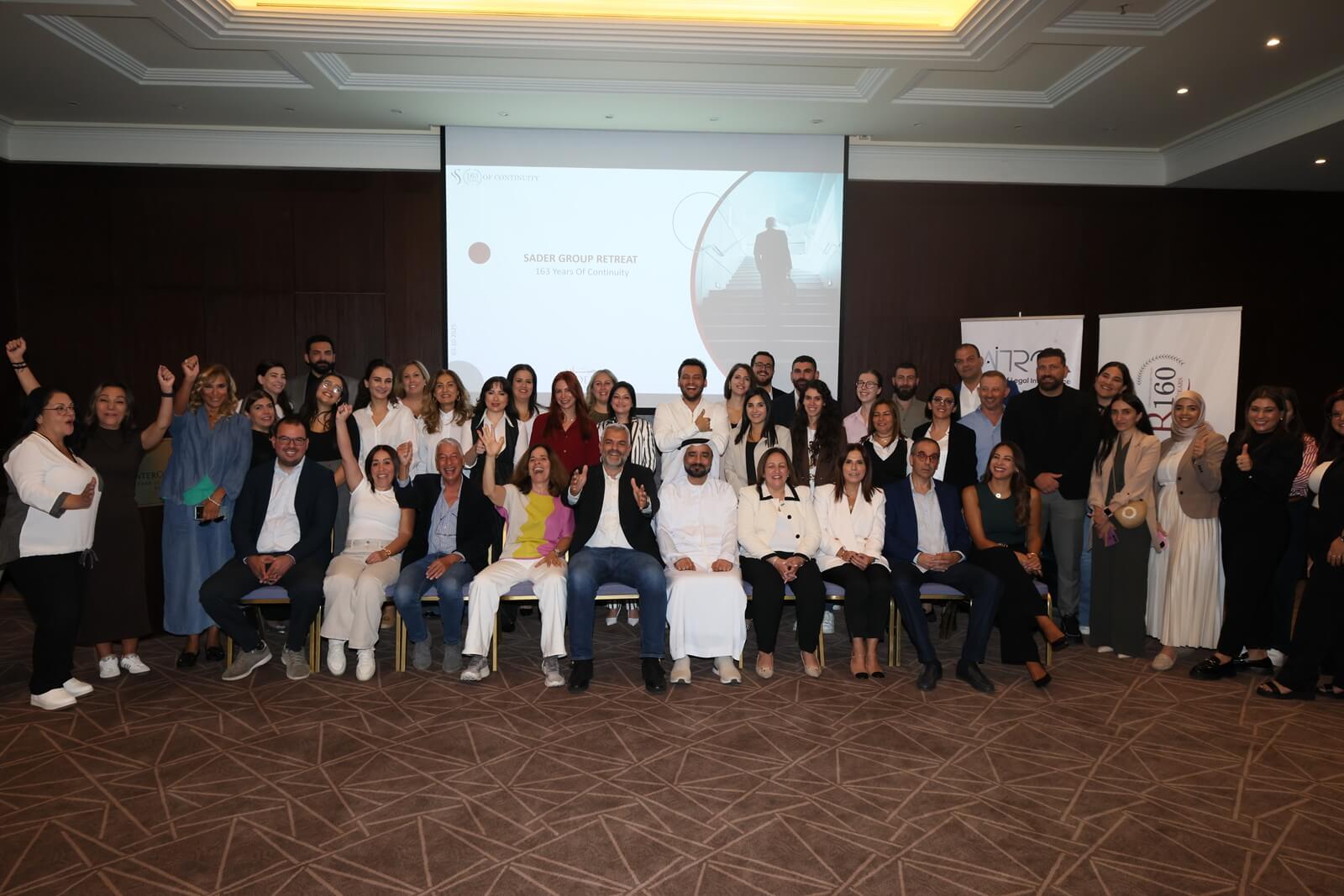
A dynamic ecosystem of jurists, institutions, innovators, and students, shaped through SADER’s leadership in legal knowledge and supported by a diverse network of experts and practitioners committed to advancing legal culture and access to justice.
SADER Generations
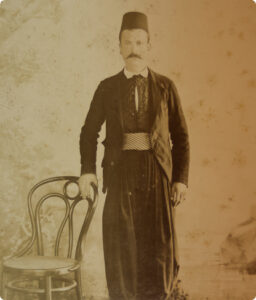
Ibrahim Sader
Sader Generations
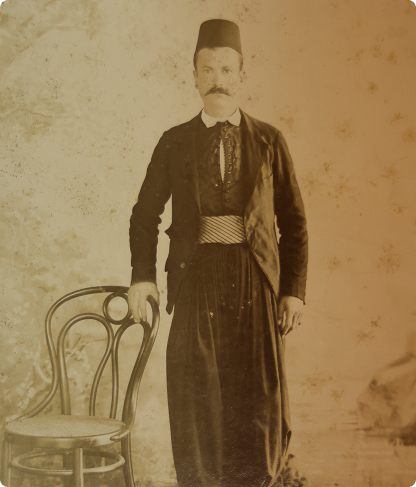
Ibrahim Sader
دور كاتب
SADER, Ibrahim (Darb al-Seem, Mount Lebanon, c. 1840s – Beirut, 8 May 1915). Lebanese bookseller, printer, and publisher.
Born in Darb al-Seem, Mount Lebanon, Ibrahim fled the sectarian conflicts of 1860 and resettled in Beirut. Little archival material on his early life in his village or in Beirut has survived; what is known derives largely from family tradition. According to this account, he established himself near the Maronite Cathedral of Saint Georges, learned the craft of umbrella repair, and set up a small shop in Souk Abou al-Nasr. Though illiterate at the time, he displayed a pronounced appetite for learning, occasionally requesting payment in books rather than money, before eventually acquiring literacy with the assistance of a learned acquaintance.
Family tradition further records that the discovery of these books by a chance passerby, who inquired whether they were for sale, prompted Ibrahim to sell his first volume, an act regarded within the family as the founding moment of Beirut's first modern commercial bookstore. In 1863, he formally established al-Maktaba al-ʿUmūmiyya (The Public Library), situated behind the Maronite Cathedral of Saint Georges in Old Beirut. In the 1870s and 1880s, he continued to publish legal works under the imprint "At the expense of Khawaja Ibrahim Sader and his sons at the Public Library,”. Among the early publications, the 1886 Principles of Ottoman Criminal Proceedings, one of the first commercial legal publications in the region. In 1893, he transferred the enterprise to his sons Yusuf and Salim, instituting the two institutional branches, press and bookstore, that would define the SADER legacy across subsequent generations. He died in Beirut on 8 May 1915, during the First World War.
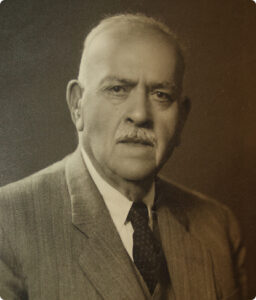
Yusuf Sader
Sader Generations
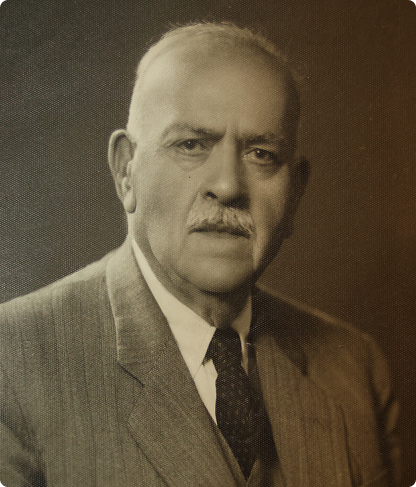
Yusuf Sader
دور كاتب
SADER, Yusuf (Beirut, 1870 – Beirut, 1953). Lebanese jurist, publisher, and civic figure; son of Ibrahim Sader
Yusuf received his early education in several primary schools in Beirut, subsequently attending the preparatory department of the Jesuit University and the Patriarchal School in Zokak el-Blat. He entered legal practice and served as a judge at the Ottoman Court of Beirut for four years, and as a member of the Administrative Council of Beirut for a decade. He was among the founding members of the Maronite Charitable Association, of which he served as president for fourteen years. He was the brother-in-law of the noted Lebanese writer and intellectual Ameen Rihani, having married the latter's sister, Adele.
In 1890, Ibrahim Sader expanded the family enterprise by establishing the Scientific Press (al-Maṭbaʿa al-ʿIlmiyya), broadening its scope to encompass publishing in law, culture, and literature. Within this enterprise, Yusuf collaborated with his brother Salim on the 1892 publication of the Règlement Organique of the Mutasarrifiyya of Mount Lebanon, the constitutional charter of the autonomous province that served as the institutional predecessor of the present-day Lebanese state. In 1908, he published in Beirut Mufakkirat Sader (The SADER Agenda), identified by archival evidence as among the earliest agenda-diaries produced in the Levant.
With the transition from Ottoman rule to the French Mandate and the establishment of the State of Greater Lebanon in 1920, Yusuf identified a critical lacuna in the region's legal culture and resolved to address it. In 1921, he founded al-Majala al-Qaḍāʾiyya (La Revue Juridique), recognised as the first legal periodical in the Levant. This periodical served as a vehicle for disseminating official legislation, executive decrees, and jurisprudence from the Courts of Cassation of Greater Lebanon and the Syrian Government, as well as substantive legal scholarship. Between 1922 and 1924, and again in 1934, he compiled and published the two volumes of the Collection of Laws, Decrees, and Orders of the State of Syria, a foundational reference work for the emerging Syrian legal order. In July 1926, only two months after its adoption in May of that year, he published the full text of the Lebanese Constitution, the charter that transformed the State of Greater Lebanon into the Lebanese Republic, the first republic in the Arab World, in the pages of La Revue Juridique. Between 1941 and 1946, he published major legal codes in French, including the Penal Code, the Commercial Code, and the jurisprudence of the Mixed Court of Appeal. Following the final evacuation of French military forces from Lebanon in 1946, he undertook the transfer of legal texts from Ottoman Turkish into French and Arabic, thereby consolidating the post-Mandate legal corpus for both local and foreign practitioners.
In recognition of his singular contribution to Lebanon's legal culture, the Lebanese Republic awarded him, in 1951, the Medal of Knowledge and the Golden Medal of Merit; the Syrian Republic conferred upon him the Medal of Merit in the same year. He died in Beirut in 1953.

Adib Sader
Sader Generations
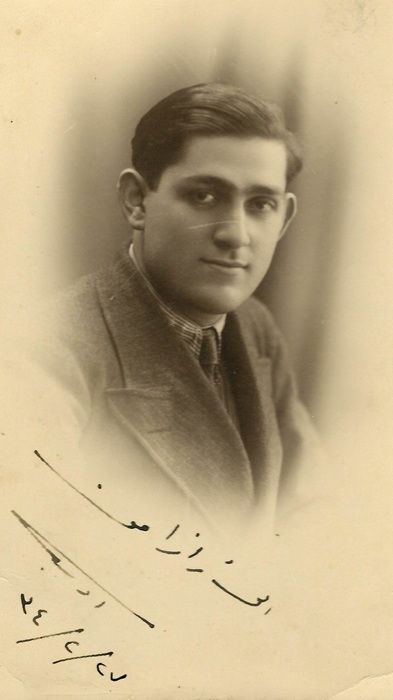
Adib Sader
دور كاتب
SADER, Adib (Beirut, 1910 – Beirut, 1982). Lebanese publisher and civic figure; son of Yusuf Sader
Upon the death of his father in 1953, Adib assumed leadership of the family enterprise, directing its various branches and publications and marking the institution's entry into its third generation. He continued the mission of legal publishing and cultural dissemination established by his predecessors, overseeing the production of numerous legal works and the ongoing publication of al-Majala al-Qaḍāʾiyya (La Revue Juridique). Under his direction, the press gained recognition as the publishing house of choice for leading figures in law and politics, securing a prominent place in the country's legal and governmental circles.
In 1956, Adib made a significant contribution to Lebanon's administrative infrastructure by creating an index to archive the Official Gazette, establishing his printing house as the de facto official printing house of the Lebanese Republic, a role it would maintain in the issuance and printing of the Official Gazette until 2000. In 1960, he founded the widely circulated Culture Magazine, known for its educational orientation and its aim of shaping civic responsibility; he also introduced summer holiday homework to Lebanon, and chaired the board of the Lebanese Publishers Company, which specialized in national school textbooks issued by the Educational Centre for Research and Development. In 1970, he was among the first to introduce automated typesetting in Lebanon, modernizing [the printing sector — detail to be confirmed]. In the same year, he assumed the printing and publication of Majallat al-ʿAdel, the journal of the Beirut Bar, alongside the cultural periodical Majallat al-Thaqāfa. In 1972, he co-founded the Union of Lebanese Publishers, and in 1973 established and chaired the Société des Éditeurs Libanais (Lebanese Publishers Corporation), an organization dedicated to promoting the interests of Lebanese publishers and strengthening the country's cultural and literary fabric.
The outbreak of the Lebanese Civil War in 1975 profoundly affected the enterprise, yet Adib continued to operate and publish despite the ongoing violence. Following the partition of Beirut, the headquarters, located in Sodeco on the dividing line between the two sectors of the city, became increasingly exposed. His son Joseph (q.v.), who had by then begun to participate gradually in the running of the institution, repeatedly risked his life to ensure its continued functioning. He died in Beirut in 1982, during the Lebanese Civil War.

Joseph Sader
Sader Generations

Joseph Sader
دور كاتب
SADER, Joseph, (Beirut, 1944). Lebanese publisher and educator, son of Adib Sader (q.v.), representing the fourth generation of the Sader publishing dynasty.
Dar SADER al-Huquqiyya, Matba'et SADER
Joseph received his secondary education at Collège de la Sagesse in Beirut and subsequently at the Institut des Apôtres in Jounieh. He holds a specialist degree in psychology and education from the French Faculty of Arts and Human Sciences in Beirut, affiliated with the University of Lyon. In 1967, he began his professional career as a literary editor at Majallat al-Thaqāfa, a periodical founded by his father. In 1970, he founded a school in [location to be confirmed].
The outbreak of the Lebanese Civil War in 1975 severely tested the institution. With the family headquarters situated in Ras al-Nabe', a neighbourhood on the dividing line between the two sectors of the partitioned capital, Joseph repeatedly risked his personal safety to keep the enterprise operational. Following the death of his father in 1982, he assumed full chairmanship of the Sader Group, a transition that also necessitated the closure of the school he had established. In 1984, the headquarters sustained direct damage from shelling, destroying a substantial portion of the archive. He responded by relocating operations in 1985 to Dekwaneh, while maintaining the printing press in activity and launching new initiatives. Among these was a landmark luxury edition of Kahlil Gibran's The Prophet, which was subsequently adopted as an official gift presented by Lebanese heads of state and government to distinguished foreign guests; the edition received the International London Festival Award in 1997. During the period 1989–1990, when Lebanon was governed by two rival administrations, Sader Legal continued to publish the Official Gazette for both factions, ensuring the continuity of legal and governmental functions amid political fragmentation.
In 1992, Joseph launched the Laws of Lebanon series, a 33-volume collection that rapidly established itself as one of the country's foremost legal references, widely adopted by government departments, institutions, law schools, judges, and legal practitioners. The series was organized according to the structure of the Lebanese state, with each law classified under its corresponding ministry. In 1994, he was appointed Sworn Expert in printing and publications for the courts. In 1996, he established the SADER Legal Research and Studies Center, led by his son, Rany, and composed of distinguished judges, lawyers, and legal experts. In the same year, he undertook a broader strategic transformation of the enterprise, evolving it from a publishing house into a producer and generator of legal knowledge. He also started digitizing law as early as 1998, supported by his son Adib, making SADER one of the first Legaltech institutions in the region.
His publishing career, spanning nearly six decades, is attested by several hundred legal titles disseminated across legal and political institutions in Lebanon and the wider Arab world. In 2022, he was awarded the Medal of Honour in recognition of his contributions to Lebanese publishing and culture. In 2026, he published a special centennial edition of the Lebanese Constitution. He has chaired the Syndicate of Lebanese Publishers since the 1990s, and currently heads the Sader Group.
Syndicate of school editors, and syndicate of graphic arts
Rany Sader
Sader Generations
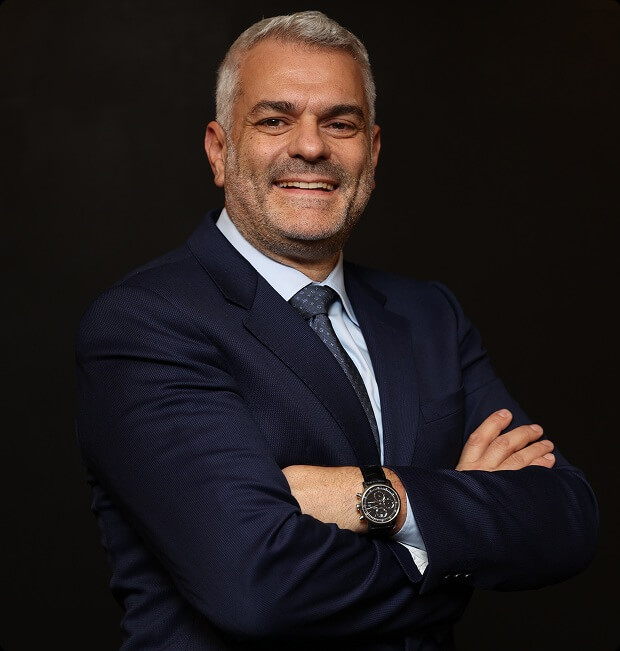
Rany Sader
دور كاتب
SADER Rany (Beirut - 1974)
(Beirut, Lebanon, 1974) Lebanese lawyer, intellectual property specialist, and legal innovation leader; fifth-generation member of the SADER family
Rany completed his legal studies in Lebanon, obtaining a Bachelor of Law from Université La Sagesse (1996) and a Master’s degree in Private Law (LL.M.) from the Holy Spirit University of Kaslik (2008–2009), with a thesis focused on publishing agreements and multimedia. He later pursued executive education in leadership, negotiation, and legal innovation, including programs at Harvard Law School, Georges Washington University, and Northwestern University.
He was admitted to the Beirut Bar Association in 1996 and began his professional career as an attorney specializing in intellectual property, entertainment, media, and business law, advising regional and international clients on IP, brand protection, copyright, and regulatory strategy.
In 1996, Rany Sader joined SADER Legal, marking the entry of the fifth generation into the institution. His arrival coincided with a structural shift in the legal publishing industry, as legal knowledge began transitioning from print to digital formats.
He progressively assumed leadership roles within the group, notably restructuring and presiding over the SADER Law Research Center (est. 1921), and contributing to the transformation of SADER into a regional legal knowledge and innovation platform operating across publishing, legal data, and technology.
As of 1997 onward, Rany led the expansion of SADER from a traditional publishing house into a multidimensional legal knowledge ecosystem, combining legal content, digital infrastructure, and innovation.
In parallel to his role within SADER, he co-founded SADER & Associates (Advocates & Legal Consultants), where he served as Managing Partner for over 20 years, contributing to the development of one of Lebanon’s and the region's leading intellectual property law firms, advising multinational corporations and high-profile clients across sectors including pharmaceuticals, technology, FMCG, luxury, fashion, telecommunications and media.
While maintaining this legal practice, his work increasingly focused on legal infrastructure and large-scale projects, including:
- Development of one of the first digitized legal corpora in Lebanon (2000)
- Leadership of the UAE legal compendium (2001–2004), among the first structured legal databases in the Gulf
- Launch of bilingual and multilingual legal platforms and legal portals across Lebanon, UAE, and Kuwait
- Contribution to the development of legal databases, court automation systems, comparative law solutions and official gazette digitization projects in collaboration with ministries and public institutions
He also led the creation of major legal publishing series, including SADER Annotated Codes and the SADER Cassation Series, which became reference tools for legal practitioners in the region.
From the mid-2010s onward, Sader’s work shifted toward legal innovation and structured legal data, focusing on multilingual legal taxonomies, AI-ready legal content, and the integration of technology into legal knowledge systems.
This trajectory culminated in the development of advanced initiatives combining law and artificial intelligence, including AI-native legal platforms and regional programs dedicated to legal transformation.
Sader’s professional trajectory evolved within a context marked by regional instability, economic disruption, and institutional fragmentation. These conditions accelerated the need for accessible, reliable, and structured legal knowledge.
His work contributed to addressing these challenges through the digitization of legal systems, the development of interoperable legal databases, and the modernization of legal content delivery across multiple jurisdictions.
Sader has held leadership and advisory roles in several regional and international organizations related to intellectual property, brand protection, and legal development. He has been actively involved in legal forums and initiatives addressing the future of law, intellectual property enforcement, and legal innovation, and is regularly invited to speak at conferences across the Middle East and internationally.egularly invited to speak at conferences across the Middle East and internationally.

Maria Elissa Sader
Sader Generations

Maria Elissa Sader
دور كاتب
Maria Elissa Sader (Zalka/ Lebanon - 2000) Lebanese Lawyer, Intellectual Property and Fashion Law Specialist; sixth-generation member of SADER Family.
Maria Elissa Sader holds an LL.M. in Intellectual Property Law from Université Paris-Est Créteil and is admitted to the Beirut Bar. Her practice focuses on anti-counterfeiting enforcement, trademark protection, and fashion law. She has gained international experience working with global luxury brands, including Hermès International and Louis Vuitton, contributing to enforcement program, rights protection strategies, and cross-border disputes. She is the founder of Fashion Law Arabia, an initiative dedicated to structuring fashion law knowledge and strengthening community engagement across the region. Her profile reflects a focused practice at the intersection of intellectual property especially the fashion and luxury industries, aligning with SADER’s broader work in vertical legal knowledge structuring and sector-specific legal innovation.

Joseph Rany Sader
Sader Generations

Joseph Rany Sader
دور كاتب
Joseph Rany Sader (Zalka/ Lebanon - 2002) Legal researcher and legal data specialist; sixth-generation member of the SADER family.
Joseph Rany Sader is a legal data specialist and sixth-generation member of the SADER family. He holds an LL.M. in Intellectual Property Law from the University of Edinburgh with Distinction (A2 mark) and wrote his dissertation on the EU sui generis database right. His work supports SADER’s digital platforms and operations, with a focus on legal data architecture and governance, multilingual legal content creation and editing, and the design of legal information platforms. He also works on emerging applications of AI at SADER and across the wider legal field as it undergoes significant digital transformation. His profile reflects an early specialization at the intersection of law, data, and technology, aligning with SADER’s transition toward AI-enabled legal knowledge infrastructure and the development of scalable legal knowledge systems that reshape how people interact with legal information.